In The Page Margin
Bring The Background To The Foreground
I flipped the whole thing.
I used to think if I could “fix” my wandering mind, my busy mind, my messy mind, my racing mind, then I would have cleared the main obstacle preventing the “real things” from getting addressed.
But now I think what is happening in my mind is real, and other happenings are raw material that keeps the mind entertained and stimulated.
Tonight, while I was having dinner, I noticed that my mind was especially busy. It held a superposition of imagined conversations and scenes. I knew I should journal, but I was too physically tired to do it tonight. I also knew that if I did not journal, my mind would keep churning out more material that would prompt me to journal.
Then I recalled that, in the past, this would have irritated me. I would have thought that I was being distracted by all those things going on in my imagination, unable to focus on the thing “at hand”.
But this time, I thought: the thing “at hand” is observing what is going on in my mind. I can let it spin. I can let it remain active for a while.
The demand-and-supply chain dissolves. It is no longer that I must do something to quite my mind so that I can return to what I was originally supposed to be doing. Engaging with whatever my mind wonders, however it wants to wonder, and doing the practical thing I had planned to do, are equally “supposed”.
I am not trying to argue for the superiority of the mind while diminishing the importance of practical life. I simply want to elevate the mind to the same level of importance that we conventionally assign to practical works.
Perhaps one might say the implicit condition that allows me to write from these interesting states of the mind is that I have the leisure to wander mentally.
But then, let's pay attention to the way we talk about “leisure” — as though letting the mind wander does not deserve to be real or important, and can happen only after more important things have subsided or been temporarily set aside.
We habitually divide our lives into what belongs to leisure and what belongs to “work” or to what is “real”.
My earliest glimpses of a "surreal", blissful state happened while I was on vacation. Time seemed to slow down; I was more relaxed than I had ever imagined I could be; and my racing mind found no reason to race.
I used to think that such moments could happen only during vacations, within extraordinary stretches of leisure, and they were therefore luxurious. Once I returned to my "normal" life, I would lose touch with them, as though certain dimensions of experience could de-collapse only in the mountains.
I used to think of life as a TV show. The main show contained disappointment, exhaustion, rushing, and never being able to rest. The ads contained serendipity, openness, and flow. Every once in a while, between two episodes, the TV would play an ad. Those ads were luxurious intervals of leisure. But they would soon be over, and we would have to go back, however reluctantly, to the main show.
I used ponder how I might carry what I gained from the “ads” back into the main show, and how, trial after trial, I might sustain it a little longer each time. But, typically, the main show was able to wash away whatever I gained from those “ads” within two weeks. I had therefore concluded that closedness during the main show was inevitable, and that I would have to wait until my next vacation to open up again.
This situation has improved drastically.
What if serendipity, openness, and flow are the “main show”, while disappointment, exhaustion, rushing, and not being able to rest are the “ads”?
A friend once described his star-gazing experience at Joshua Tree: we tend to imagine the sky as a few stars scattered across a vast expanse of darkness. But it is actually a little darkness scattered across a vast field of stars.
This entirely amazed me.
We tend to think that serendipity and wonderful encounters are a few stars scattered across a vast expanse of waiting and searching.
What if it is actually a little waiting and searching scattered across a vast expanse of serendipity?
I'm Secretly Admiring Them
I would never tell someone to watch for their health. Because I know how real the struggle can be. I did the same thing and so much has happened.
It has taken me a long time to reach a place where I am no longer swept away by shame — the shame of not having managed it well.
I only want to express how humbled I am, and how beautiful this experience can be.
One day, you will receive validation, encouragement, and kindness you have learned not to expect, which feels far beyond what you deserve. That same night, you find yourself working with tears streaming down your face. And those moments will propel you forward for a long time in the dark, until you see the next light.
You will keep doubting whether the next light will come at all. But it does — usually just after you have exhausted the last drop of your patience, motivation, and self-encouragement. And you will think it is marvelous that you have survived this long.
You will call it luck the first time, and you will call it luck the second time. You are thankful, but you also worry that you may use up your luck too soon.
When that worry reaches its height, you realize that it is not called luck.
It is called your ability to see light.
Overgrown Trails
I walked through two severely overgrown stretches of trail in Glen Hazel.
I couldn't help seeing that hiking is an organizing principle of my life.
In my professional life and my leisure time, I am engaged in the same activity, only through different forms of embodiment.
I easily wander off the trail, but this creates the conditions for serendipity: I don't stick to a fixed route. As I walk, I leave a trace behind me, and only afterward does that trace become recognizable as the route I took.
When the trail is overgrown, I force my way through.
When the terrain is unexpectedly difficult I take one step at a time.
There is a particularly good feeling in pushing through an overgrown trail. I don't deny that part of it comes from conquering something difficult. But conquering is not the primary part. Intimacy is.
It is precisely in those places that I get a chance to be intimate with the unruly side of nature. Grass blades, spider nets, and insect-chewed leaves — they are all over my face. Sometimes I have to turn around and use my butt as the trailblazer.
All Seasons Are Spring
I said since March, I have felt as though every two weeks has been a season.
Yes, there have been many seasons. But all of them are spring.
With all the blooming and sprouting and greening, and thawing …
All seasons are experienced as spring.
Several Times In The Margin
I just finished a gorgeous Nietzsche chapter: Of the flies of the market-place.
Yesterday I got a Kierkegaard book from a used book store.
I read one chapter that spoke to me a lot (The Greatest Danger). I thought I had found gold.
Then I read another chapter (Either/Or) that didn't speak to me at all.
Angry, and even more intrigued by such lottery-like reading,
I opened Thus Spoke Zarathustra.
It begins: "FLEE, my friend, into your solitude!"
What a seamless and great continuation!
So I just finished a gorgeous Nietzsche chapter
where I couldn't help but writing “I LOVE YOU!!” several times in the page margin.
Lotus Leaf
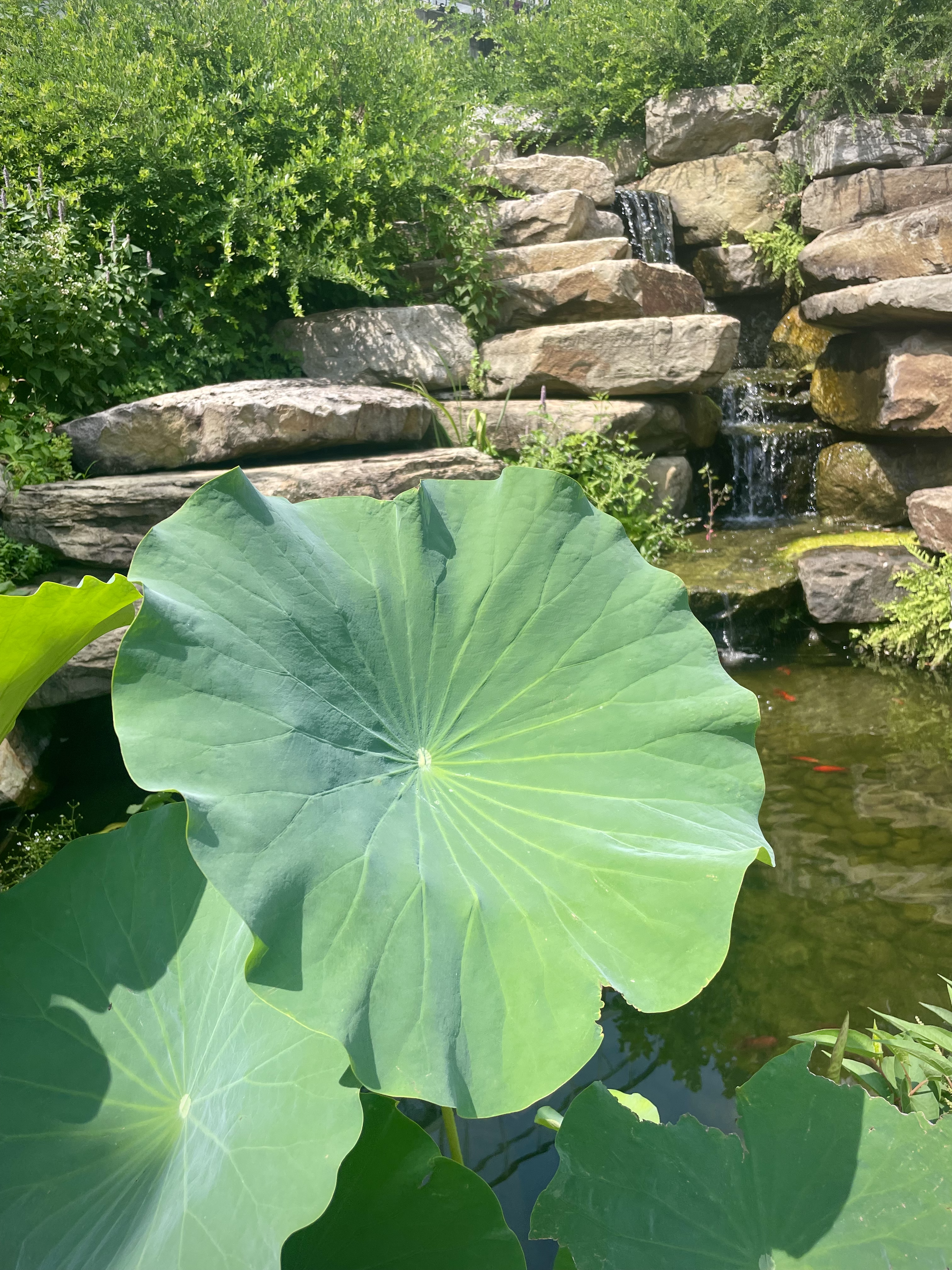
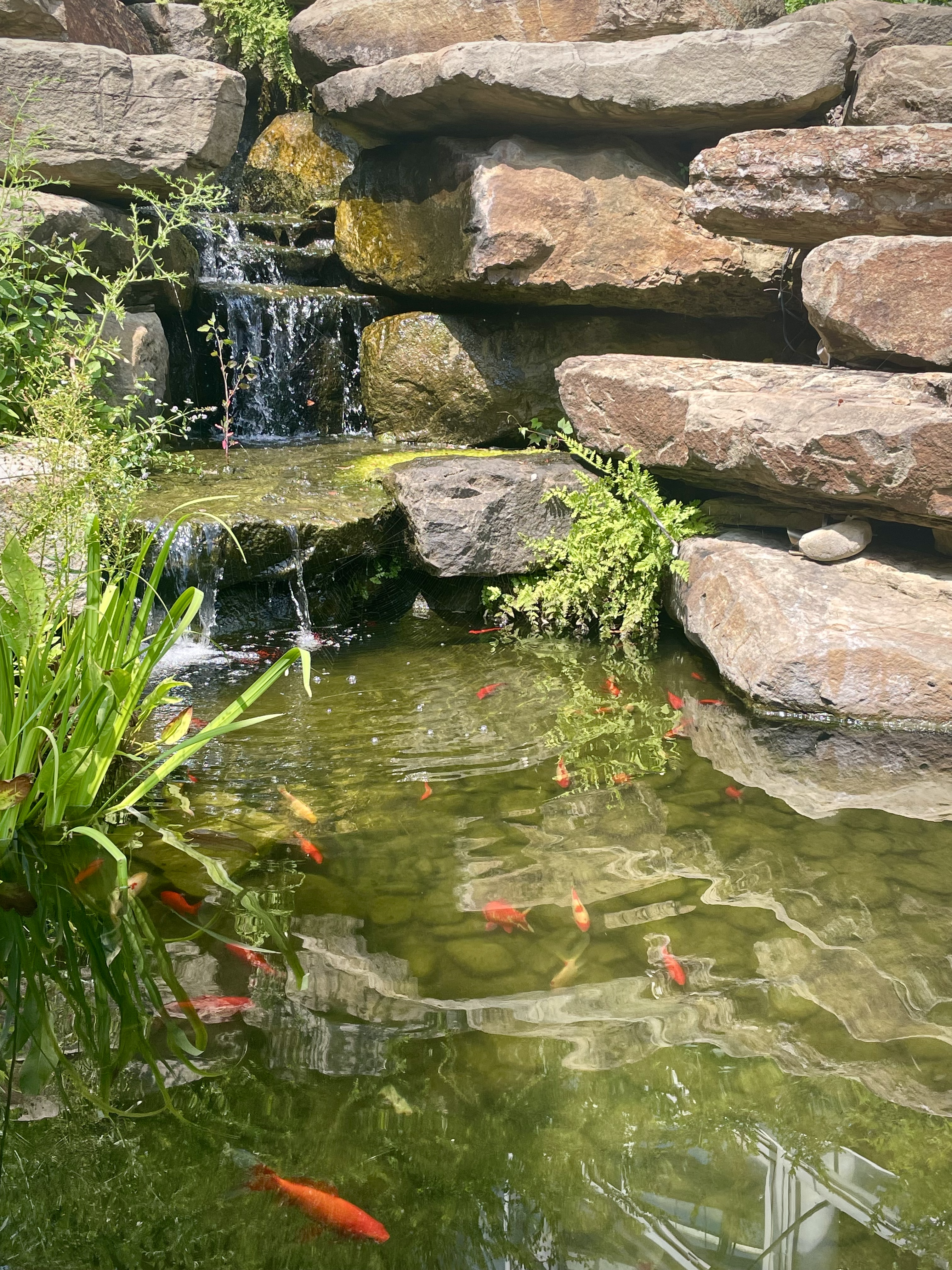
I was in a botanical garden contemplating death
I sat beside a fish pond among several lotus stems. For a moment, my gaze fell on the center of a giant leaf, and I thought: whenever I cringe, that would be the perfect place to hide my face.