Murmuring and Descending
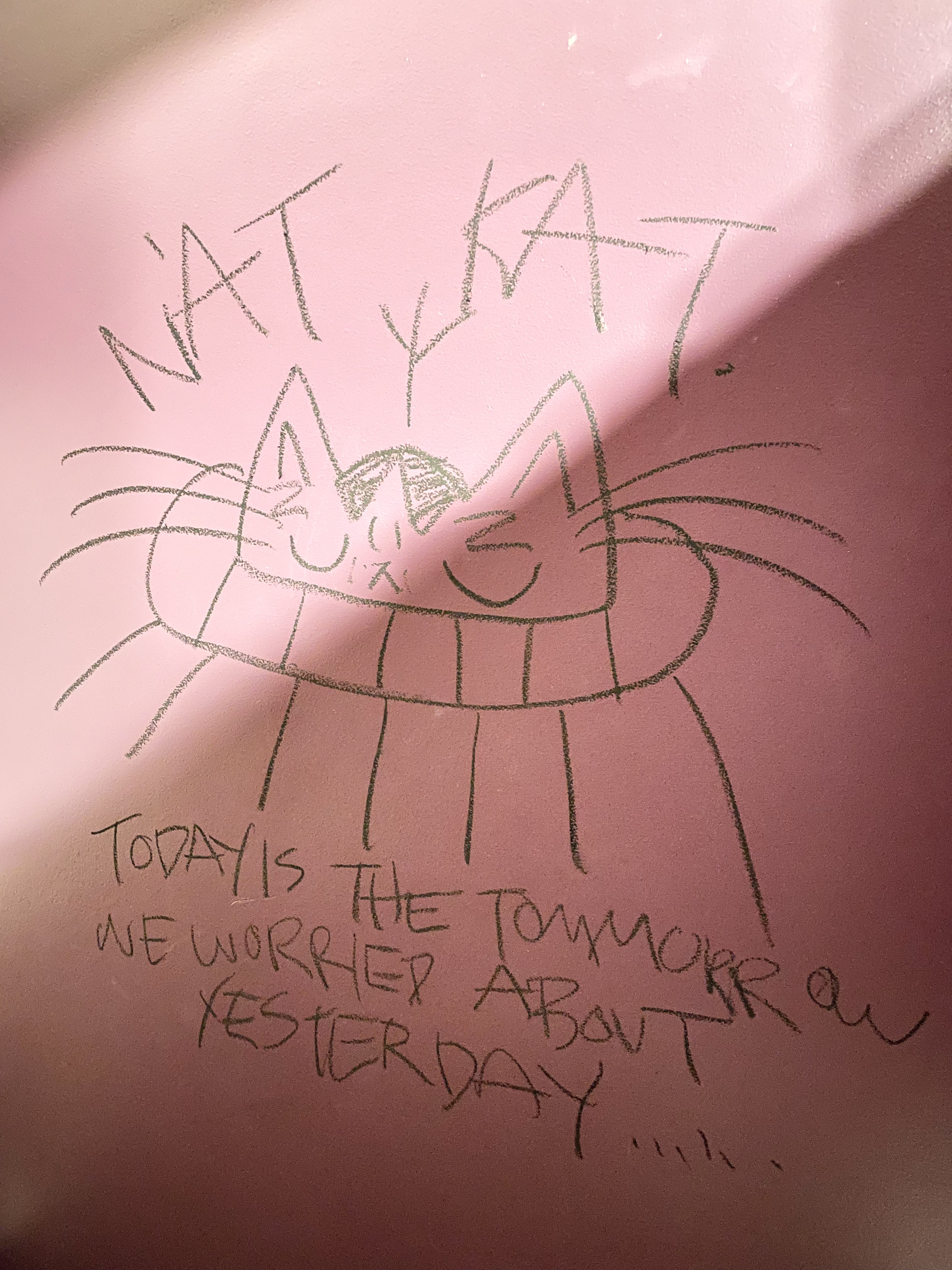
I spent nearly two hours in Girty's Woods yesterday afternoon, partly because my favorite band FastasticCat was playing a show in the same neighborhood at 8pm.
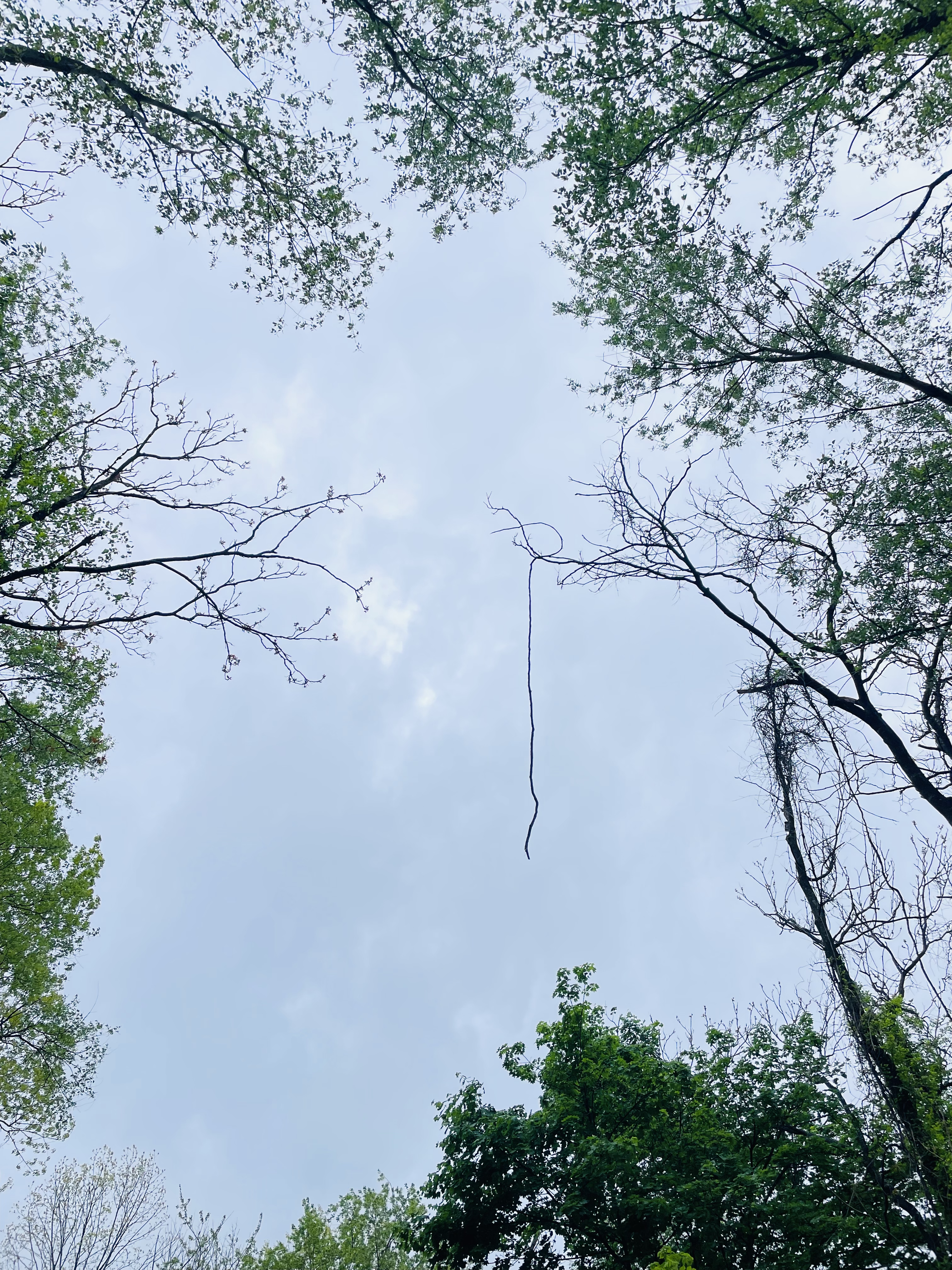
Girty's Woods turned out to be an unexpectedly adorable place with thick and soft ground-cover plants everywhere, spilling over the trail — an essential criteria in my personal definition of an “enchanted forest”. I couldn't believe I had waited until my 6th year in Pittsburgh to visit.
It wasn't a silent walk. I was murmuring, pretending to be in a conversation about the onion-like layers of difficulty, which lays beneath any collection of scientific challenges that we put on the table today.
Hard things have a thousand faces. Maybe they are not there to be solved. They are there to keep the conversation going.
Counting is never solved. Variable binding is never solved. Role-filler independence is never solved. Grounding is never solved. And grounding is never solved because reference is never solved. And reference is never solved because there is no such thing as a true physical world holding the endpoints of all reference chains. It is reference all the way down, even though, in many projects and conversations, we proceed as if such a world of endpoints exists. But if you keep digging, you might arrive at the dizzying realization that the subject and the object are the same; the referent and the referenced are the same!
As that moment in my pretend conversation, I was like I don't want to do science anymore, I want to do philosophy. Then an opposing voice went, No, no, no, you have been trained to do science. So I conceded, Fine. Radical assumption making!
Had I just dismantled the endearing area of grounding?
No.
When Donald Davidson wrote that there's no such thing as semantics, did he destroy the study of semantics? No. He announced the onset of the real study of semantics.
The same thing applies to NLP. Word on the street says NLP is dead. Is it really dead or has it been reborn?
When someone devotes themselves soooooo intensely to the study of X that they begin to look possessed by the devil, they may eventually stare straight into the void and end up realizing there's no such thing as X. By then, they have accidentally signed themselves up for a very intriguing language game: talking about X despite seeing that there's no such thing as X.
A humble version of that process in me is I have come to realize there's no such thing as 'generalization'. But in realizing this, I landed on 'learning', along with a few terms in the vicinity such as 'analogy' and 'similarity' (oh yea I hesitated to say 'induction'). For now, I think generalization is merely a name we give to various forms of nontrivial learning. There is no categorical success or failure of generalization, only matters of strength or degree. Any operationalization (data splits or success metrics) merely draws an arbitrary divide between the presence and absence of generalization.
But why have I landed on 'learning'? Is learning real?
I don't know!
I'd be delighted to be asked again, three years from now, whether I still think there is such a thing as learning.
Maybe I will. Maybe I will have landed somewhere else.
But as long as I still decide to speak, as long as I haven't committed myself to a lifelong silence retreat, I gotta land somewhere, however provisionally, and keep the game alive.
I have learned so many things from hiking.
I navigate physical terrains with way more skills and composure than I navigate abstract terrains, like career or life. One might be tempted to make a distinction: hiking is more or less a pastime for me, while career and life are way more 'real'.
No. They are equally real.
Life is a fractal. No branch is less real than any other branch.
Therefore, I can use my experience in one branch to guide myself through another. Hiking is about navigation, and navigation happens everywhere.
I have a tendency to force my way through difficult terrains. I have a large “move ahead and see what happens” budget before I decide to back off. And sometimes, by the time I have spent that budget, I already find myself in the middle of something where backing off is just as difficult as moving forward. At those moments, I tend to think, Well, since I'm already here, why not …
In general, I'm much more willing to force my way forward than to retreat and find another way, which has, unsurprisingly, thrown myself into a few reasonable risks.
But as I force my way through, I also begin to see how a number of perceived blocks — things that would have prompted other versions of me to back off — are just annoying.
Yesterday, I made a pretty incredible descent down a steep slope. The slope belonged to a corridor carved by high-voltage transmission lines. I have hiked through such corridors before, and I know that many of these trails are wacky. Still, I wasn't sufficiently wary.
Worse than the steepness, water was running down the barely discernible walking path due to the fresh rain. Despite all this, I thought if I just keep putting one foot in front of the other, I would at last see myself at the bottom of the descent.
Soon after I embarked on this rocky road, panic began to surge. It is precisely in moments like this that my own stubbornness — along with the irony of Well, since I'm already here, why not … — are most vividly felt.
At some point, I decided that I was probably okay making the descent. My shoes would get wet. My clothes would get dirty. My hair would catch a lot of shrubs. I might fall on my butt several times. My arms and ankles might collect a few scratches.
But none of this was actually threatening.
Even if I fell, I wouldn't roll all the way down the hill. The shrubs would catch me, which meant that most of the negative consequences would collapse back into the category of wet shoes, muddy clothes, tangled hair, and scratched skin. And they were just annoying.
I believe physical pain and emotional pain have different qualities. I'm not dismissing mental health issues, not do I think it is a weakness to take emotional pain seriously. But I also think a lot of emotional pain, once given intentional time to be re-evaluated, begins to take on the same quality as wet shoes, muddy clothes, or slipping into shrubs.
It is just annoying, in contrast to the real hike, the real challenging descent I'm determined to make.
And being annoying means being strictly less powerful than being inflicting.
Once I begin the hike, I no longer expect to keep my shoes and clothes clean. They're gonna get dirty anyway, sooner or later. These annoying things need to be handled. They slow me down. They demand effort and energy. But that's exactly the point!
Otherwise, what do I restore energy for? If I went on some sort of a multi-day hike, I'd wash my clothes and clean my shoes every night precisely so they could get dirty again the next day. I'd tend to wounds, fatigue, and worn-out muscles for the sake of the next cycle of hurt & care. But annoying things lack the seriousness to send me back.
At the end of several “high-stakes” hikes, after the panic and adrenaline have moved through me, it is always great to be grounded again.
Now I have second thoughts about my alleged ideal life as a hermit. Perhaps it is not a serious claim. I do need a kind of contrast that a hermit's life cannot provide.
Ancient Chinese poems exuberantly celebrate the lives of woodcutters and fishermen, especially in contrast to the lives of those serving in the imperial court. But I bet woodcutters and fishermen wouldn't feel they have anything particularly worth celebrating. The beauty of living like a hermit is only heartfelt when one has lived a life in contrast to it. A fish doesn't celebrate the existence of water. The “thank goodness” euphoria only arises after being deprived of water, then placed back into it.
Despite the risks, these high-stakes hikes have greatly expanded my tolerance band for annoying things. My perception of what is inflicting versus what is annoying has shifted. Forward-charging doesn't mean being reckless. It may appear so from the outside, but it never feels that way from within.
And then there I was, losing myself in the intoxicating grooves and vibrations with the Cats, wearing a pair of soaking-wet shoes.